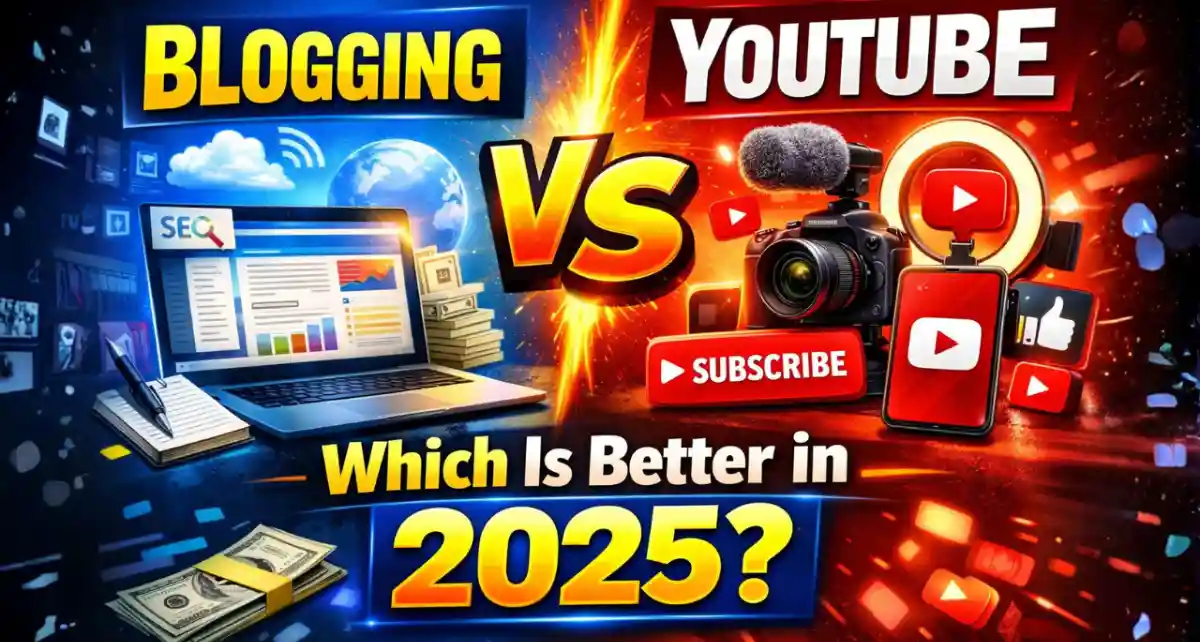
Choosing between blogging and YouTube in 2025 is a major decision for creators, entrepreneurs, and digital marketers.
Both platforms offer strong income potential, global reach, and long-term growth. However, they work very differently in terms of effort, skills, investment, and scalability.
This article breaks down Blogging vs YouTube in 2025 in a clear, practical way so you can decide which platform suits your goals, resources, and long-term vision.
Why Blogging vs YouTube Is a Big Question in 2025
The digital landscape has changed significantly.
AI tools, cloud computing, and new content discovery algorithms have reshaped how people consume information online.
At the same time, competition has increased on both platforms. Success now depends on strategy, consistency, and choosing the right medium early.
Understanding the strengths and limitations of blogging and YouTube is essential before investing your time.
What Is Blogging in 2025?
Blogging in 2025 is no longer just about writing articles.
Modern blogs integrate SEO, AI-assisted content creation, digital marketing tools, and advanced software solutions to attract and retain traffic.
Blogs are often built around niches such as technology, finance, health, education, and online security.
Key characteristics of blogging today:
- Search-engine–driven traffic
- Long-term content value
- Strong integration with SaaS platforms
- High potential for passive income
What Is YouTube in 2025?
YouTube has evolved into a full-scale content and business platform.
Creators now rely on high-quality video production, audience engagement, and algorithm optimization.
YouTube content performs well for entertainment, tutorials, reviews, and personality-driven niches.
Key features of YouTube in 2025:
- Video-first content consumption
- Algorithm-based discovery
- High engagement potential
- Strong brand-building opportunities
Blogging vs YouTube: Learning Curve Comparison
The learning curve differs significantly between blogging and YouTube.
Blogging requires understanding SEO, keyword research, and content optimization. YouTube demands camera confidence, editing skills, and presentation ability.
Learning Curve Comparison Table
| Factor | Blogging | YouTube |
|---|---|---|
| Technical skills | SEO, CMS, analytics | Filming, editing, thumbnails |
| Time to learn basics | Moderate | High |
| Dependency on personality | Low | High |
| Content format | Text-based | Video-based |
Initial Investment: Blogging vs YouTube
Initial costs play a big role for beginners.
Blogging generally requires lower upfront investment compared to YouTube.
Cost Comparison Table
| Expense | Blogging | YouTube |
|---|---|---|
| Equipment | Basic laptop | Camera, mic, lights |
| Software | Web hosting services | Video editing software |
| Monthly cost | Low | Medium to high |
| Scalability cost | Minimal | Increases with quality |
Blogging mainly depends on reliable web hosting services and basic software solutions.
Traffic Source Comparison in 2025
Traffic sources are fundamentally different.
Blogging relies heavily on search engines, while YouTube depends on platform algorithms and recommendations.
Traffic Source Table
| Platform | Primary Traffic Source |
|---|---|
| Blogging | Google Search |
| YouTube | YouTube Algorithm |
| Blog growth | Gradual, stable |
| YouTube growth | Faster but volatile |
Blogs often benefit from evergreen traffic, while YouTube content may peak and decline faster.
Income Potential: Blogging vs YouTube
Both platforms offer strong earning opportunities, but monetization methods differ.
Blogging allows multiple income streams, while YouTube is more centralized.
Monetization Comparison Table
| Income Source | Blogging | YouTube |
|---|---|---|
| Display ads | Yes | Yes |
| Affiliate marketing | Very strong | Moderate |
| Sponsored content | Yes | Yes |
| Digital products | Strong | Limited |
| SaaS referrals | High | Medium |
Blogs perform exceptionally well for high-CPC niches like cybersecurity, VPN software, cloud computing, and data privacy.
SEO vs Algorithm Dependency
One major difference lies in content discoverability.
Blogs are optimized for SEO and long-term ranking, while YouTube creators must constantly adapt to algorithm changes.
Key differences:
- Blogs rank for years if optimized correctly
- YouTube videos need consistent uploads
- SEO favors structured, informative content
- Algorithms favor engagement and watch time
For users targeting stable growth, blogging offers more predictability.
Content Longevity and Passive Income
Content lifespan matters in 2025.
A well-written blog post can generate traffic and revenue for years.
YouTube videos often have a shorter active lifespan unless they are evergreen tutorials.
Content Longevity Table
| Factor | Blogging | YouTube |
|---|---|---|
| Evergreen potential | Very high | Medium |
| Passive income | Strong | Moderate |
| Update requirement | Occasional | Frequent |
This makes blogging attractive for long-term digital assets.
Branding and Authority Building
YouTube excels at personal branding.
Blogging excels at niche authority.
If your goal is to become a recognizable face or influencer, YouTube has an edge. If your goal is authority in software solutions, AI tools, or online security, blogging is more effective.
Scalability with AI Tools and Automation
In 2025, AI tools play a major role.
Blogging integrates easily with AI writing tools, analytics platforms, and SEO automation software.
YouTube automation is possible but still requires significant manual effort.
Blogging scales better with fewer human resources.
Risk Factor: Platform Dependency
Risk is often overlooked.
Blogs offer more control because you own the website.
YouTube creators are fully dependent on a third-party platform.
Key risks include:
- Algorithm updates
- Monetization policy changes
- Account suspensions
From a business perspective, blogging provides higher control and stability.
Blogging vs YouTube: Which Is Better for Beginners?
The answer depends on skills and goals.
Best Platform by User Type
| User Type | Better Option |
|---|---|
| Introverts | Blogging |
| Camera-shy creators | Blogging |
| Confident speakers | YouTube |
| Long-term investors | Blogging |
| Personal brand builders | YouTube |
Can You Do Both Blogging and YouTube Together?
Yes, and many successful creators do.
Combining both platforms creates a strong digital ecosystem.
Benefits include:
- Blog for SEO and passive income
- YouTube for branding and trust
- Cross-platform traffic growth
- Higher authority and diversification
This hybrid approach is increasingly popular in 2025.
Common Mistakes People Make When Choosing a Platform
Many beginners choose based on trends rather than strategy.
Common mistakes include:
- Starting YouTube without consistency
- Blogging without SEO knowledge
- Expecting quick results
- Ignoring niche selection
Success on either platform requires patience and planning.
Final Verdict: Blogging vs YouTube in 2025
There is no universal winner.
Blogging is better for:
- Stable, long-term income
- High-CPC niches
- SEO-driven growth
- Lower risk and higher control
YouTube is better for:
- Personal branding
- Faster audience connection
- Visual content niches
- Influencer-style growth
Your best choice depends on your skills, resources, and long-term vision.
Frequently Asked Questions (FAQs)
Many people ask whether blogging is still profitable in 2025. Blogging remains highly profitable, especially in niches like cloud computing, cybersecurity, SaaS platforms, and data privacy.
Another common question is whether YouTube is oversaturated. While competition is high, creators with unique value and consistency can still grow successfully.
Users also wonder if blogging takes longer to make money. Blogging generally takes more time initially but offers stronger passive income in the long run.
Finally, people ask whether beginners should start with YouTube or blogging. Beginners should choose the platform that aligns with their natural strengths rather than trends.