Online threats are increasing every day. Viruses, malware, ransomware, and phishing attacks are no longer limited to big companies. Even normal users with a laptop or smartphone are at risk.
Many people believe that a basic antivirus is enough. Others think paid antivirus software is necessary for complete online security. This confusion makes it hard to decide what is actually best.
In this detailed guide, we will compare Free vs Paid Antivirus in simple English. You will understand features, price, benefits, limitations, and which option suits your needs best, especially in today’s cybersecurity-focused digital world.
What Is Antivirus Software and Why It Is Important
Antivirus software is a security tool designed to detect, block, and remove malicious software from your device. It protects your system from viruses, spyware, ransomware, and other threats.
In today’s digital environment, antivirus is not optional. Whether you use cloud computing, SaaS platforms, or web hosting services, security is essential.
Key reasons antivirus software is important:
- Protects personal and financial data
- Prevents malware and ransomware attacks
- Improves overall online security
- Supports data privacy and safe browsing
Understanding Free Antivirus Software
Free antivirus software is available at no cost. It usually offers basic protection against common threats.
Most beginners start with free antivirus because it is easy to install and does not require payment. It works well for light users with minimal online activity.
However, free antivirus tools are often limited in features and advanced protection.
Common Features of Free Antivirus Software
Free antivirus programs focus on core protection only. They are designed to block known threats but may not handle advanced attacks.
Free Antivirus Features Table
| Feature | Availability |
|---|---|
| Virus detection | Yes |
| Malware removal | Yes |
| Real-time protection | Limited |
| Firewall | No |
| Ransomware protection | No |
| VPN software | No |
| Customer support | Very limited |
Free antivirus is suitable for users who browse occasionally and avoid risky downloads.
Limitations of Free Antivirus Software
Free antivirus software has several limitations that users should understand before relying on it completely.
Most free tools do not offer full cybersecurity coverage. They may miss zero-day threats and advanced malware.
Main drawbacks include:
- Limited real-time protection
- No advanced firewall
- No email or phishing protection
- No data privacy tools
- No cloud-based threat analysis
These limitations can expose users to serious risks, especially in digital marketing tools and SaaS platforms.
What Is Paid Antivirus Software?
Paid antivirus software is a premium security solution that offers complete protection. It covers not only viruses but also online threats like phishing, identity theft, and ransomware.
Paid antivirus is designed for users who value data privacy, online banking security, and professional work environments.
It is often bundled with extra software solutions such as VPN software, password managers, and cloud security tools.
Key Features of Paid Antivirus Software
Paid antivirus tools offer a wide range of features that go beyond basic protection.
Paid Antivirus Features Table
| Feature | Availability |
|---|---|
| Advanced malware protection | Yes |
| Real-time threat detection | Yes |
| Firewall | Yes |
| Ransomware protection | Yes |
| VPN software | Often included |
| Data privacy tools | Yes |
| AI-based threat detection | Yes |
| Customer support | 24/7 |
These features make paid antivirus ideal for professionals and businesses.
Free vs Paid Antivirus: Feature Comparison
Understanding the direct comparison helps users make better decisions.
Free vs Paid Antivirus Comparison Table
| Feature | Free Antivirus | Paid Antivirus |
|---|---|---|
| Cost | Free | Paid (Yearly) |
| Security level | Basic | Advanced |
| Ransomware protection | No | Yes |
| VPN software | No | Yes |
| AI tools integration | No | Yes |
| Cloud-based protection | Limited | Full |
| Technical support | Minimal | Dedicated |
Paid antivirus clearly offers more complete cybersecurity coverage.
Pricing Comparison: Free vs Paid Antivirus
Price is a major factor for many users. Free antivirus has zero cost, while paid antivirus requires a subscription.
Antivirus Pricing Table
| Type of Antivirus | Price Range (Per Year) |
|---|---|
| Free Antivirus | ₹0 |
| Paid Antivirus | ₹800 – ₹3,500 |
Paid antivirus pricing depends on features, number of devices, and bundled software solutions.
Security Level and Threat Protection Differences
Free antivirus mainly protects against known threats. It may fail against advanced cyberattacks.
Paid antivirus uses AI tools, machine learning, and cloud computing to detect new and evolving threats in real time.
Paid solutions are better at:
- Blocking zero-day attacks
- Preventing phishing websites
- Protecting financial transactions
- Securing cloud-based data
This makes paid antivirus more reliable for serious online security needs.
Impact on System Performance and Speed
Many users worry that antivirus software slows down their system.
Free antivirus tools may consume fewer resources but lack optimization. Paid antivirus uses smarter scanning and cloud-based analysis.
Performance Comparison Table
| Aspect | Free Antivirus | Paid Antivirus |
|---|---|---|
| System load | Medium | Low |
| Scan optimization | Basic | Advanced |
| Background scanning | Limited | Smart & AI-based |
Paid antivirus often performs better despite offering more features.
Role of VPN Software in Paid Antivirus
VPN software is rarely included in free antivirus. Paid antivirus often bundles a secure VPN.
VPN software helps:
- Hide IP address
- Protect data on public Wi-Fi
- Improve data privacy
- Prevent tracking
This is especially useful for users working with web hosting services, SaaS platforms, and cloud computing environments.
Antivirus for Businesses and Professionals
Businesses deal with sensitive data and customer information. Free antivirus is not suitable for professional use.
Paid antivirus provides enterprise-grade cybersecurity, including firewall management and centralized dashboards.
Business Use Comparison Table
| Requirement | Free Antivirus | Paid Antivirus |
|---|---|---|
| Data protection | Low | High |
| Multi-device security | No | Yes |
| Compliance support | No | Yes |
| Cloud security | Limited | Advanced |
Paid antivirus is clearly better for business and professional use.
Antivirus and Data Privacy Concerns
Data privacy is a major concern today. Free antivirus tools may collect user data for ads or analytics.
Paid antivirus usually follows strict privacy policies and offers better control over data usage.
Key data privacy benefits of paid antivirus:
- No ads or tracking
- Secure data handling
- Encrypted browsing
- Compliance with privacy standards
This is important for users who care about online security and privacy.
Free Antivirus: Pros and Cons
Free Antivirus Pros and Cons Table
| Pros | Cons |
|---|---|
| No cost | Limited protection |
| Easy to install | No ransomware defense |
| Suitable for beginners | No VPN or firewall |
| Basic malware detection | Weak customer support |
Free antivirus is good for casual users with low-risk usage.
Paid Antivirus: Pros and Cons
Paid Antivirus Pros and Cons Table
| Pros | Cons |
|---|---|
| Complete cybersecurity protection | Subscription cost |
| VPN and data privacy tools | Renewal required |
| AI-based threat detection | |
| Strong customer support |
Paid antivirus offers value for users who prioritize safety and performance.
Which Antivirus Is Best for Beginners?
Beginners often start with free antivirus to understand basic security. This is acceptable for learning purposes.
However, as online activity increases, free antivirus becomes insufficient. Paid antivirus provides better long-term protection.
For beginners using digital marketing tools or SaaS platforms, paid antivirus is a safer choice.
Best Practices While Using Antivirus Software
Regardless of free or paid, users should follow security best practices.
Important tips include:
- Keep antivirus updated
- Avoid suspicious downloads
- Use strong passwords
- Enable firewall settings
- Combine antivirus with safe browsing habits
Antivirus works best when combined with user awareness.
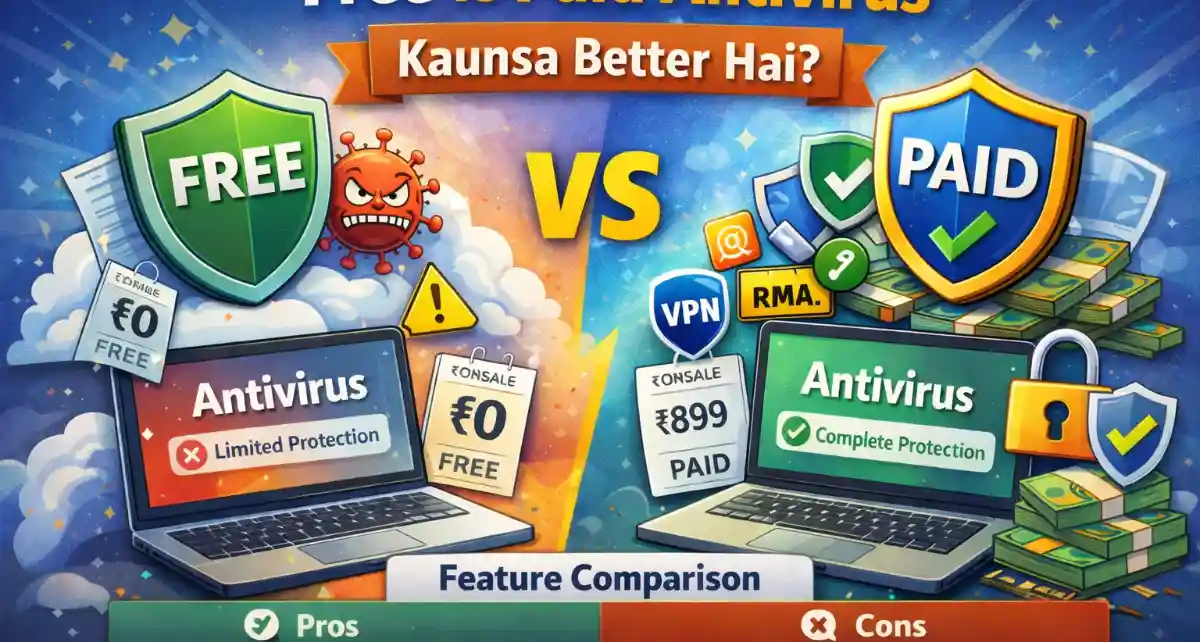
Final Verdict: Free vs Paid Antivirus – Kaunsa Better Hai?
Free antivirus is good for basic protection and low-risk users. It helps beginners understand cybersecurity basics without spending money.
Paid antivirus is better for complete online security, data privacy, and professional use. It offers advanced features, VPN software, and AI-based protection.
If your work involves cloud computing, online payments, or web hosting services, paid antivirus is the smarter choice.
FAQs About Free vs Paid Antivirus
Many users ask whether free antivirus is safe. Free antivirus is safe for basic protection but not enough for advanced threats. It should not be the only security layer for heavy internet users.
Another common question is whether paid antivirus is worth the price. Paid antivirus is worth it if you value data privacy, financial security, and uninterrupted online work.
People also ask if antivirus software slows down devices. Modern paid antivirus software uses AI tools and cloud computing to minimize performance impact.
Some users wonder if VPN software is necessary with antivirus. VPN software adds an extra layer of online security, especially on public networks.
Finally, users often ask how many devices one antivirus can protect. Paid antivirus plans usually support multiple devices, making them cost-effective for families and professionals.
Conclusion:
Choosing between free and paid antivirus depends on your needs. Free antivirus works for minimal usage, but paid antivirus provides complete cybersecurity and peace of mind in today’s digital world.